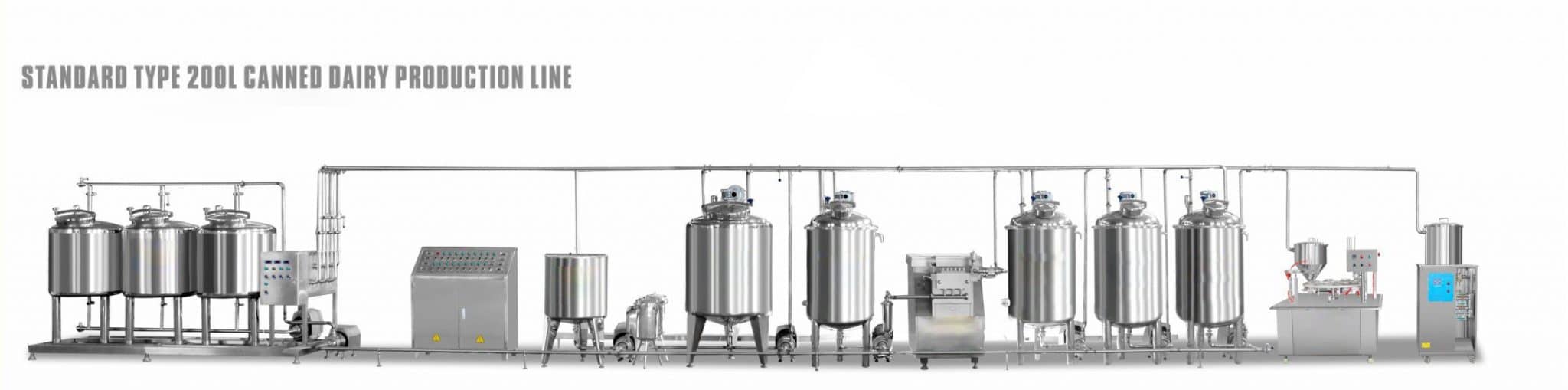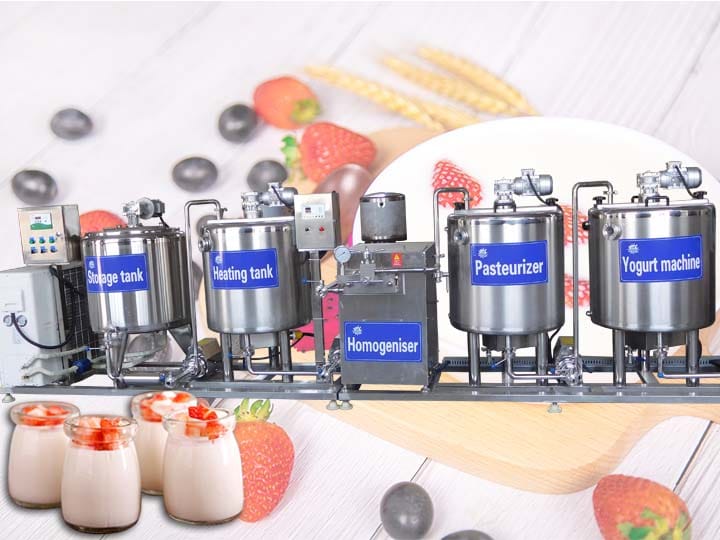
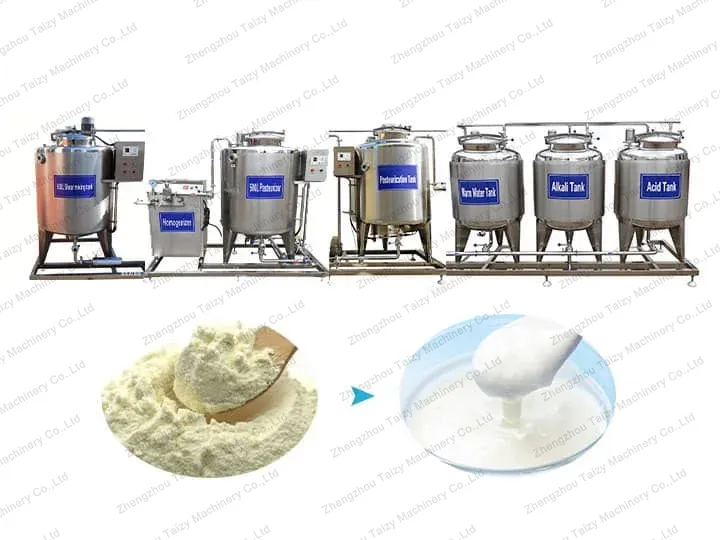
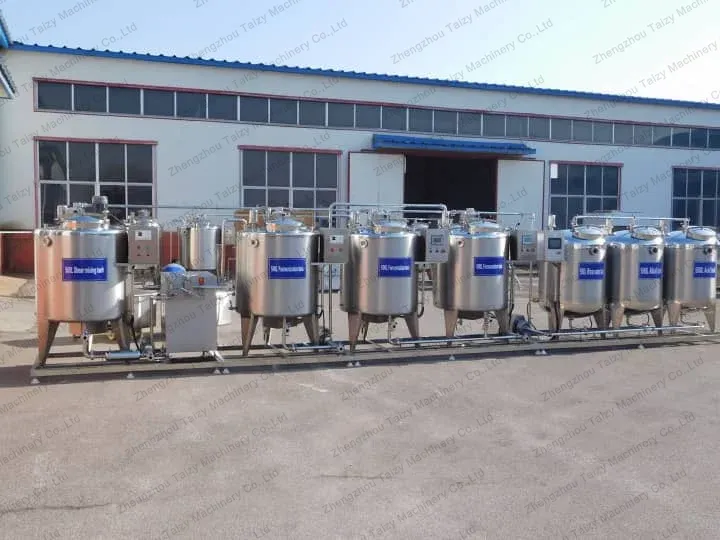
The reconstituted milk yogurt production line offered by Taizy is designed to assist dairy manufacturers in establishing a small-scale yogurt production line, which utilizes milk powder as its primary raw material.
For developing markets such as those in Africa, where the supply of fresh milk is relatively scarce, this “milk powder solution” represents an ideal choice for dairy processing operations.
Production Process Flow: From Powder to Yogurt
The 300L-500L powder reconstituted milk yogurt production line follows a precise 6-stage process that transforms milk powder into premium yogurt. Each stage is critical for achieving consistent quality and optimal texture.
| Problem | Cause | Solution |
|---|---|---|
| Separation | Inadequate homogenization | Increase pressure to 25 MPa |
| Grainy Texture | Incomplete powder dissolution | Extend mixing time, increase temperature |
| Slow Fermentation | Cold milk or old culture | Check inoculation temperature, use fresh culture |
| Slow Fermentation | Insufficient solids or over-fermentation | Adjust powder ratio, reduce fermentation time |
| Off-Flavor | Contamination or old milk | Improve hygiene, use fresh milk powder |
What Are the Advantages of Using Milk Powder to Make Yogurt?
Compared to fresh milk, using milk powder as a raw material for yogurt offers numerous advantages, making it the preferred choice for industrial-scale yogurt production:
- Stable and Consistent Raw Material Quality: The composition of fresh milk varies depending on the season, the pasture, and the livestock feed used. In contrast, milk powder undergoes a standardization process that allows for the precise adjustment of fat and protein levels, ensuring that every batch of yogurt possesses a consistent texture and flavor profile.
- Lower Costs and Easier Transport: Milk powder remains stable at room temperature, making it significantly easier and more cost-effective to transport; it also boasts a much longer shelf life. In regions where local milk supplies are limited or logistics networks are still developing, milk powder often represents the only viable raw material option.
- Production Flexibility and Formula Control: Using milk powder as a raw material enables manufacturers to “customize” yogurt products to meet specific market demands. Manufacturers can increase the total solids content to enhance the yogurt’s thickness, adjust fat levels to achieve a smoother mouthfeel, or incorporate whey protein to boost the overall protein content.
- Stable and Uninterrupted Production: Fresh milk supplies are heavily influenced by seasonal factors and pasture yields, which can sometimes lead to production delays. The use of milk powder, however, ensures uninterrupted production throughout the year, eliminating concerns regarding seasonal shortages in milk supply.
- Enhanced Food Safety Assurance: During the spray-drying process used to produce it, milk powder undergoes a sterilization step, thereby offering greater control over microbiological safety. This allows manufacturers to more easily meet the stringent export standards required by high-end markets, such as those in the European Union and the United States.
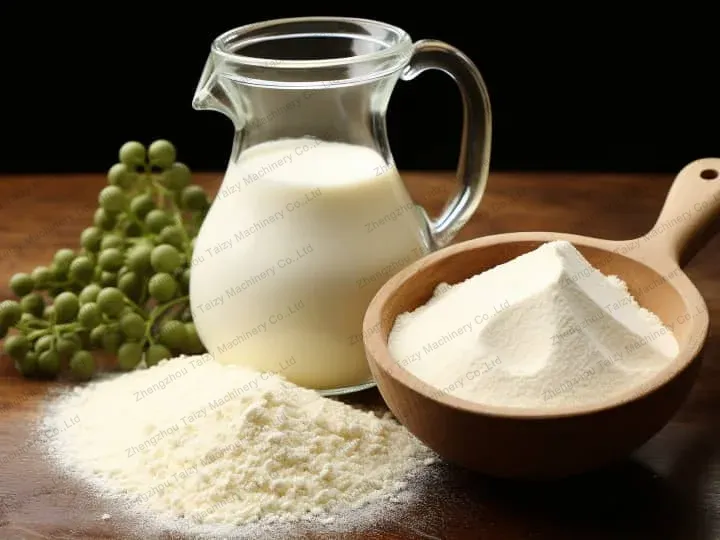
Investment Considerations About Milk Powder Yogurt Production Line
When investing in a 300L-500L reconstituted milk yogurt production line, consider these factors:
1. Production Scale Matching
Choose the 300L line for startups with 500-1000L/day capacity needs. Select the 500L line for established businesses requiring 1000-2000L/day capacity. This yogurt production line milk powder solution is ideal for small-scale yogurt production businesses looking to minimize initial investment while maintaining quality.
2. Raw Material Availability
Ensure a reliable supply of high-quality milk powder. Consider local sourcing to reduce transportation costs and ensure freshness. For dairy processing equipment in Africa, powdered milk solutions are particularly important, as local milk sources are limited.
3. Yogurt Processing Plant Cost
Compare the yogurt processing plant cost between powder and fresh milk solutions. Powder line typically requires lower initial investment due to reduced infrastructure needs (no cold chain, smaller storage facilities).
4. Yogurt Making Machine Price
When evaluating reconstituted milk yogurt production line price, consider the complete system including mixing, sterilization, fermentation, and CIP cleaning. The powder solution often offers better value due to simpler infrastructure requirements and lower operational complexity.
5. After-Sales Support
Choose an equipment supplier with reliable after-sales service, including installation support, operator training, and spare parts availability. For small-scale yogurt production in developing markets, local service support is critical.
Conclusion: Why Choose Powder Yogurt Production
The 300L-500L powder yogurt production line offers dairy manufacturers a flexible, efficient, and cost-effective solution for yogurt production. From milk powder to finished product, the complete process ensures consistent quality, high efficiency, and easy operation.
This reconstituted milk yogurt production line solution is particularly ideal for small-scale yogurt production in Africa and other developing markets where dairy processing equipment needs to be reliable, cost-effective, and easy to operate.
Ready to start your yogurt production? Contact Taizy today for a free consultation and customized equipment recommendation based on your production goals, yogurt processing plant cost requirements, and yogurt-making machine price budget.
In addition, we offer yogurt production lines with other production capacities; please click the link to view them: